 Spanish website · how it works
The website now has a full Spanish version, written by a translator rather than a browser plugin. This page explains how the Spanish addresses are built, why that structure helps Spanish search results, how search engines are told which version is which, and how your team edits both languages in WordPress.
Addresses are shown on pixelhouseeurope.com, the live domain. Screenshots were taken from the staging site in October 2026, where the Spanish version is ready ahead of launch.
Each Spanish page lives in an /es/ folder on the same domain as the English site. Where the translator supplied a Spanish name for a page or section, the address uses it, so the whole address reads as Spanish.
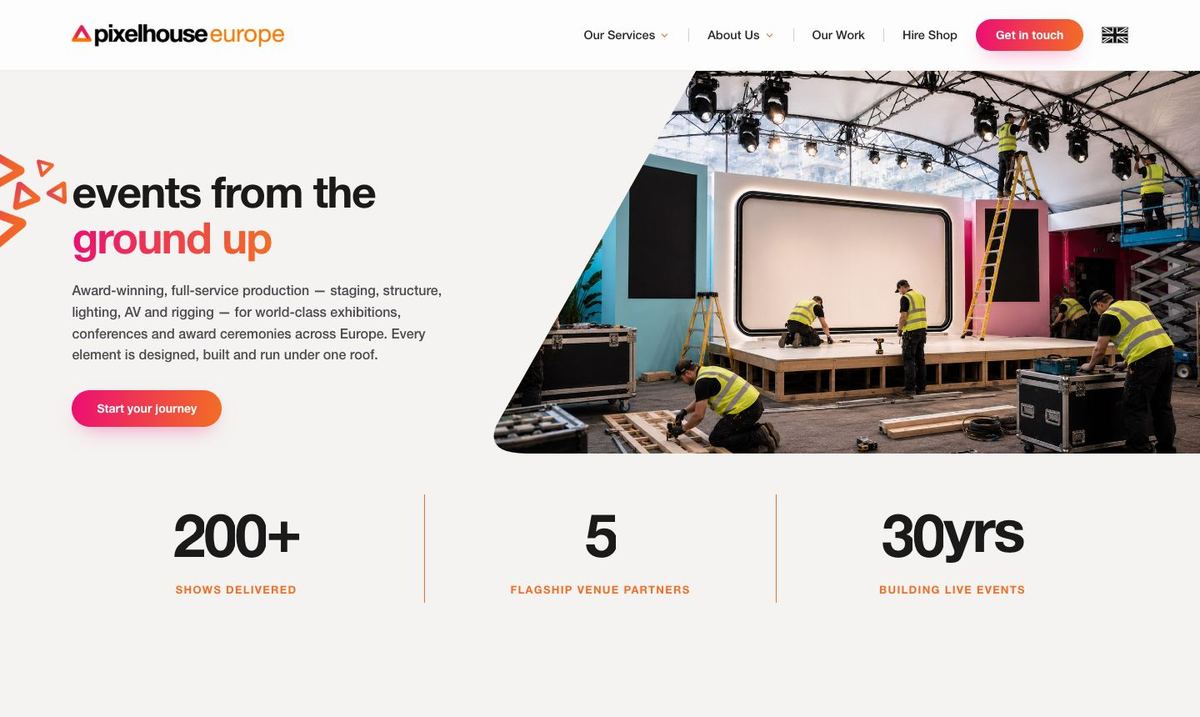
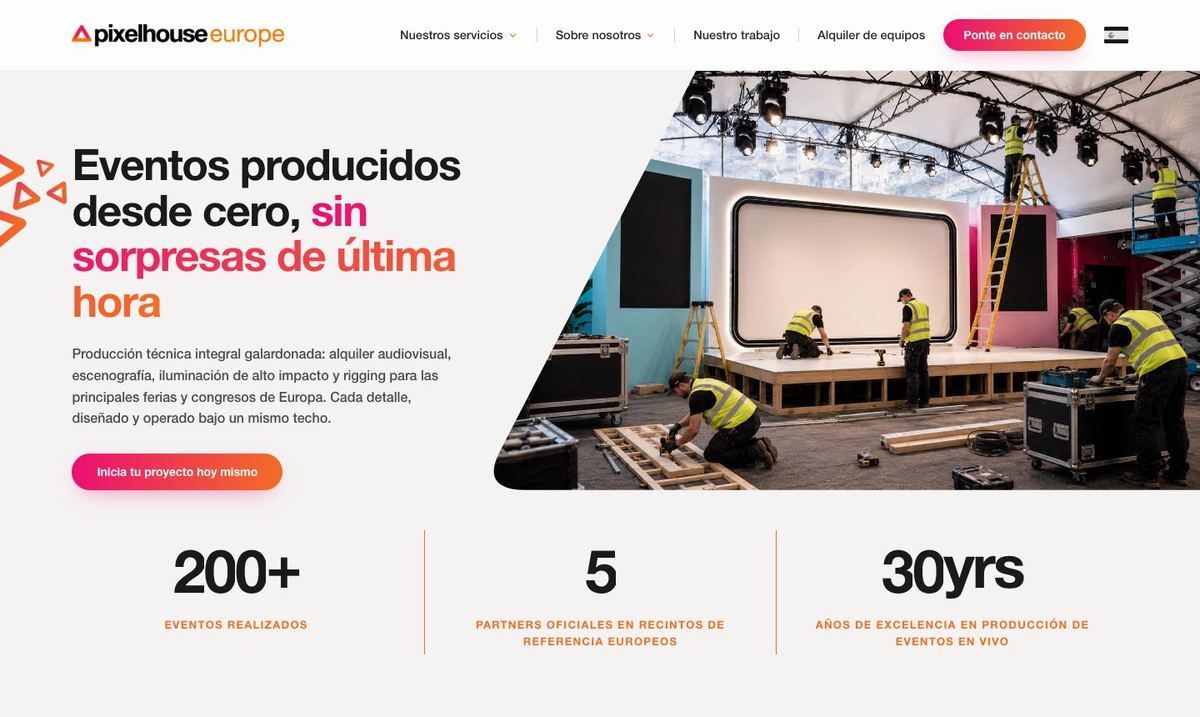
The Spanish homepage is simply /es/.
Services become /es/servicios/, case studies /es/casos-de-exito/ and team bios /es/equipo/.
Case studies and team members keep their own names, e.g. /es/equipo/joe-archard/. Legal pages keep their English names for now and show English text until the reviewed Spanish versions are added.
If someone types an English page name inside /es/, such as /es/about-us/, they're sent permanently to /es/sobre-nosotros/.
Seven Spanish addresses from the previous website (azteceu.com) now redirect to the matching Spanish page here, so existing links and bookmarks keep working.
Each page's Spanish name is a single field in WordPress. Change it and every link to that page updates on its own.
| Page | English | Spanish |
|---|---|---|
| Main pages | ||
| Home | / | /es/ |
| About us | /about-us/ | /es/sobre-nosotros/ |
| Meet the team | /meet-the-team/ | /es/nuestro-equipo/ |
| Contact us | /contact-us/ | /es/contacto/ |
| Sustainability (once published) | /sustainability/ | /es/sostenibilidad/ |
| Services | ||
| All services | /services/ | /es/servicios/ |
| Exhibition & Event AV | /services/exhibition-event-av/ | /es/servicios/audiovisual-ferias-eventos/ |
| Interactive Experiences | /services/interactive-experiences/ | /es/servicios/experiencias-interactivas/ |
| Full-Service Production | /services/full-service-production/ | /es/servicios/produccion-integral/ |
| Case studies | ||
| Our work | /case-studies/ | /es/casos-de-exito/ |
| In-Cosmetics Global | /case-studies/in-cosmetics-global/ | /es/casos-de-exito/in-cosmetics-global/ |
| TikTok Cannes | /case-studies/tiktok-cannes/ | /es/casos-de-exito/tiktok-cannes/ |
| Jack Morton | /case-studies/jack-morton/ | /es/casos-de-exito/jack-morton/ |
| Team bios | ||
| All 8 team members | /team/joe-archard/ | /es/equipo/joe-archard/ |
| Legal pages (English slug kept) | ||
| Privacy Policy | /privacy-policy/ | /es/privacy-policy/ |
| Loss / Damage Waiver | /loss-damage-waiver/ | /es/loss-damage-waiver/ |
| Equipment Rental T&Cs | /equipment-rental-tcs/ | /es/equipment-rental-tcs/ |
| Goods and Services T&Cs | /goods-and-services-tcs/ | /es/goods-and-services-tcs/ |
| Sale of Goods T&Cs | /sale-of-goods-tcs/ | /es/sale-of-goods-tcs/ |
| Use of Website T&Cs | /use-of-website-tcs/ | /es/use-of-website-tcs/ |
| Old azteceu.com addresses (permanent redirects) | ||
| Sobre nosotros | /sobre-nosotros/ | /es/sobre-nosotros/ |
| Opiniones | /sobre-nosotros/opiniones/ | /es/casos-de-exito/ |
| Contáctenos | /contactenos/ | /es/contacto/ |
| Organización de ferias | /organizacion-de-ferias/ | /es/servicios/audiovisual-ferias-eventos/ |
| Servicios para los expositores | /servicios-para-los-expositores/ | /es/servicios/audiovisual-ferias-eventos/ |
| Premios y conferencias | /premios-y-conferencias/ | /es/servicios/produccion-integral/ |
| Estudio | /estudio/ | /es/servicios/produccion-integral/ |
There are three common ways to give a website a second language. We chose a folder on the main domain because it's the option Google can index cleanly, and the Spanish pages benefit from the main domain's reputation.
Spanish text only existed on the visitor's screen. Search engines only ever saw English, so the Spanish version could not appear in results.
Starts with no search history. Links earned by the main site don't help it, and it's a second domain to renew and maintain.
Search engines often treat a subdomain as a separate site, so it builds its reputation more slowly than a folder.
One site with one reputation. Every link to any page helps both languages, and each Spanish page has its own address that can be indexed.
Each Spanish page is served with its Spanish text already in the page, at its own address. Google recommends separate addresses for each language version rather than switching language with cookies or scripts.
produccion-integral and audiovisual-ferias-eventos match what Spanish speakers search for, and read naturally in Spanish results and when shared.
Spanish pages are marked lang="es-ES", share previews use the es_ES locale, and every Spanish page names itself as the main copy (its canonical), so Google doesn't treat it as a duplicate of the English page.
Spanish pages have their own search title and meta description, so the text in Spanish search results is in Spanish.
Old Spanish addresses and mistyped ones use permanent (301) redirects. Search engines pass the old address's ranking signals on to the new one.
Because the language is part of the address, cached pages always come back in the right language. No visitor is ever served another visitor's language.
When someone opens an English page, the site checks two things in their browser before the page appears. Anyone who arrives on a Spanish page from Google or a link stays on it.


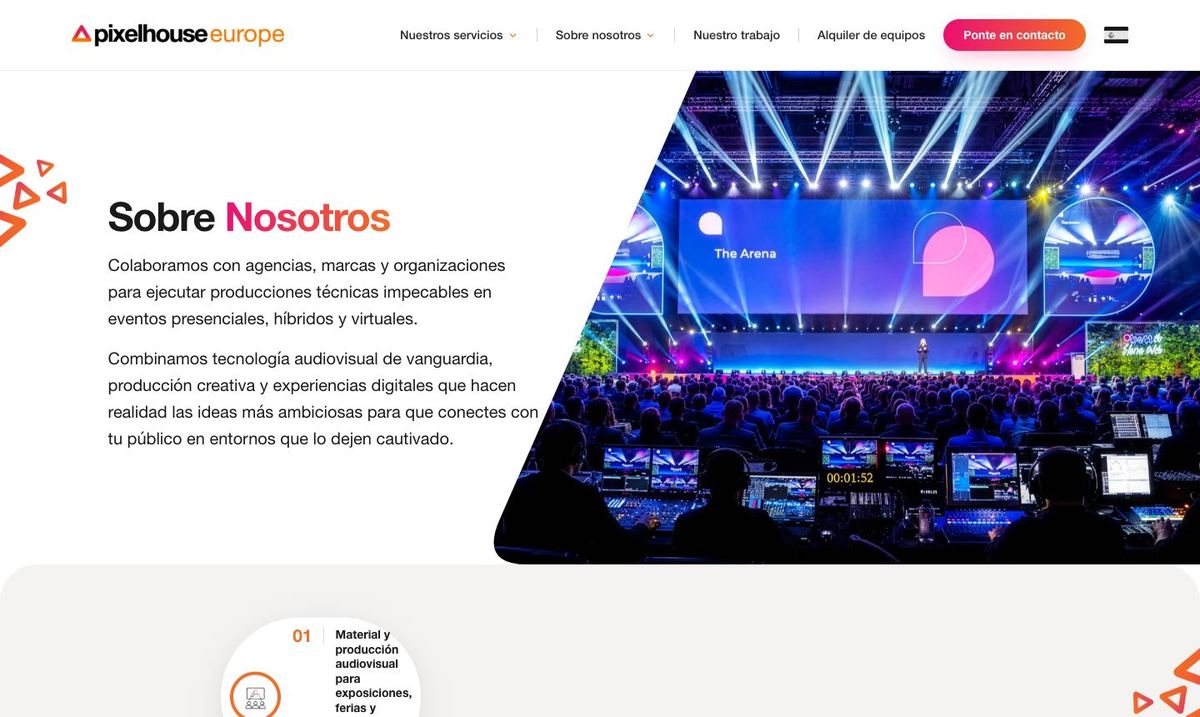
/about-us/?utm_source=linkedin and landed on the Spanish page, with the tracking tag kept.Google and other crawlers always get the page they asked for, so both versions get indexed as they are.
The redirect keeps everything after the address, so utm_ tags from emails and adverts still reach Google Analytics.
Browser language is what someone reads, not where they are. An English-speaking visitor in Barcelona sees English, and a Spanish speaker abroad sees Spanish.
Every page carries a short set of hidden tags listing all its language versions. Google uses them to show Spanish searchers the Spanish page and English searchers the English one, and to understand that the two pages are translations of each other rather than duplicates.
<!-- In the <head> of BOTH /about-us/ and /es/sobre-nosotros/ -->
<link rel="alternate" hreflang="en"        href="https://pixelhouseeurope.com/about-us/">
<link rel="alternate" hreflang="es"        href="https://pixelhouseeurope.com/es/sobre-nosotros/">
<link rel="alternate" hreflang="x-default" href="https://pixelhouseeurope.com/about-us/">

<!-- Plus, on the Spanish page only -->
<html lang="es-ES">
<link rel="canonical" href="https://pixelhouseeurope.com/es/sobre-nosotros/">
The English version of this page. Shown to people searching in English.
The Spanish version, using the translated address. Shown to people searching in Spanish.
The fallback for everyone else. It points at English, the site's main language.
Each language names itself as the main copy. If the Spanish page pointed at the English one, Google would treat it as a duplicate and skip it.
The tags come from each page's Spanish address, so nobody maintains them by hand. Rename a Spanish page and its tags update on both versions.
The XML sitemap currently lists the English addresses only, and Google finds the Spanish ones through these tags. Adding the Spanish addresses to the sitemap before launch is recommended.
There's still one editing screen per page, as before. Each module on that page has four tabs. Images and settings are entered once and used by both languages. Text has an English field and a Spanish field, and the Spanish field always starts with ES.
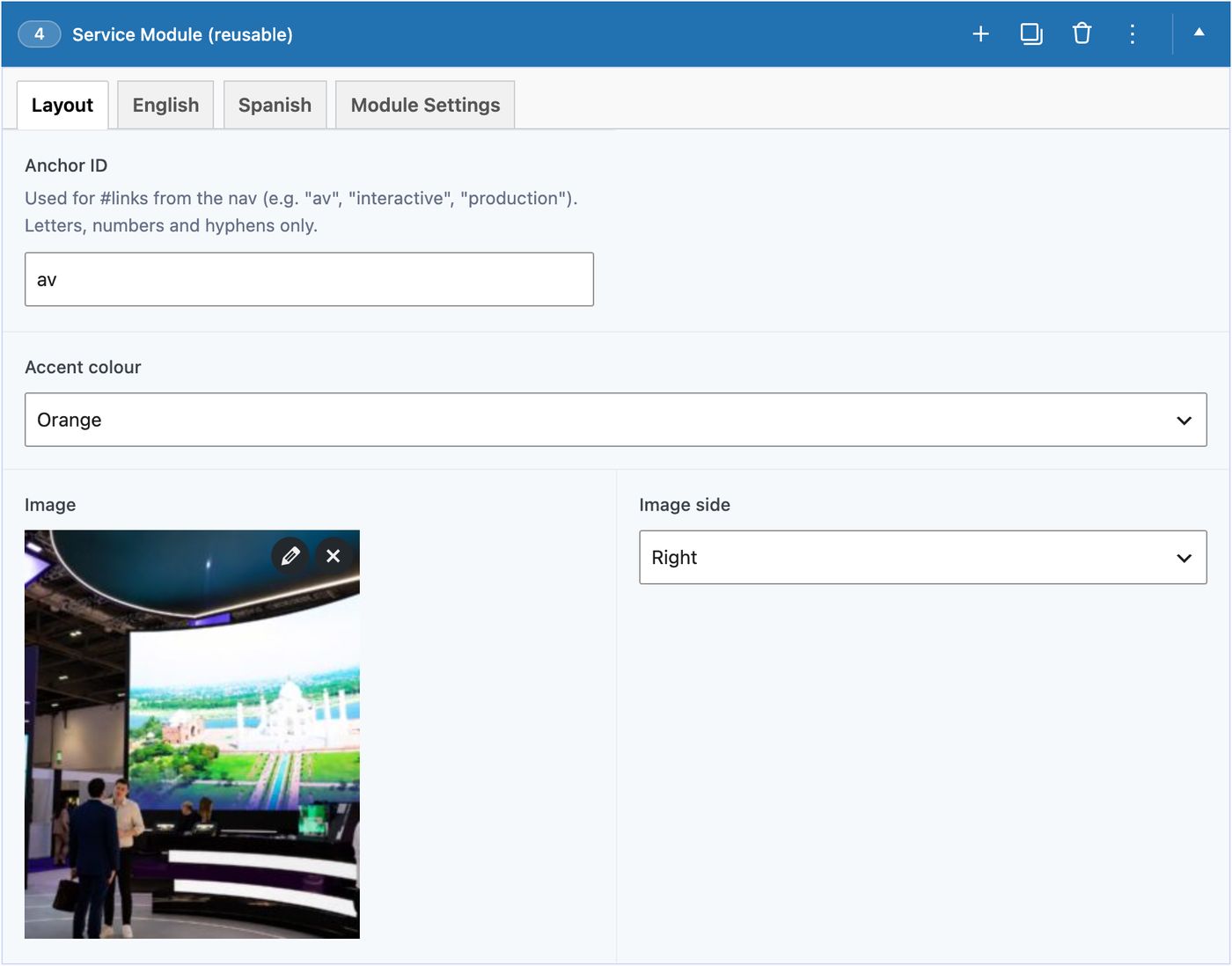
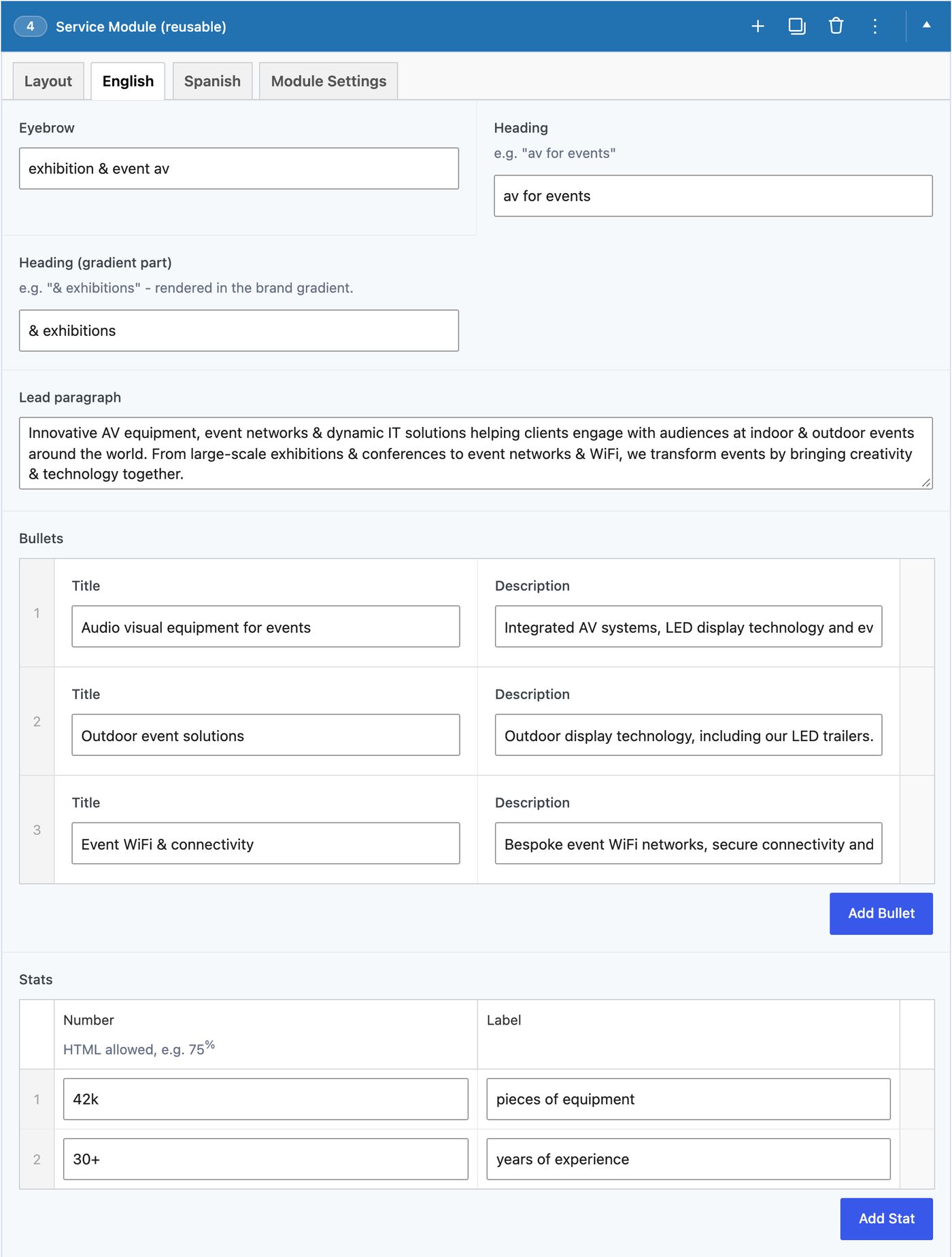
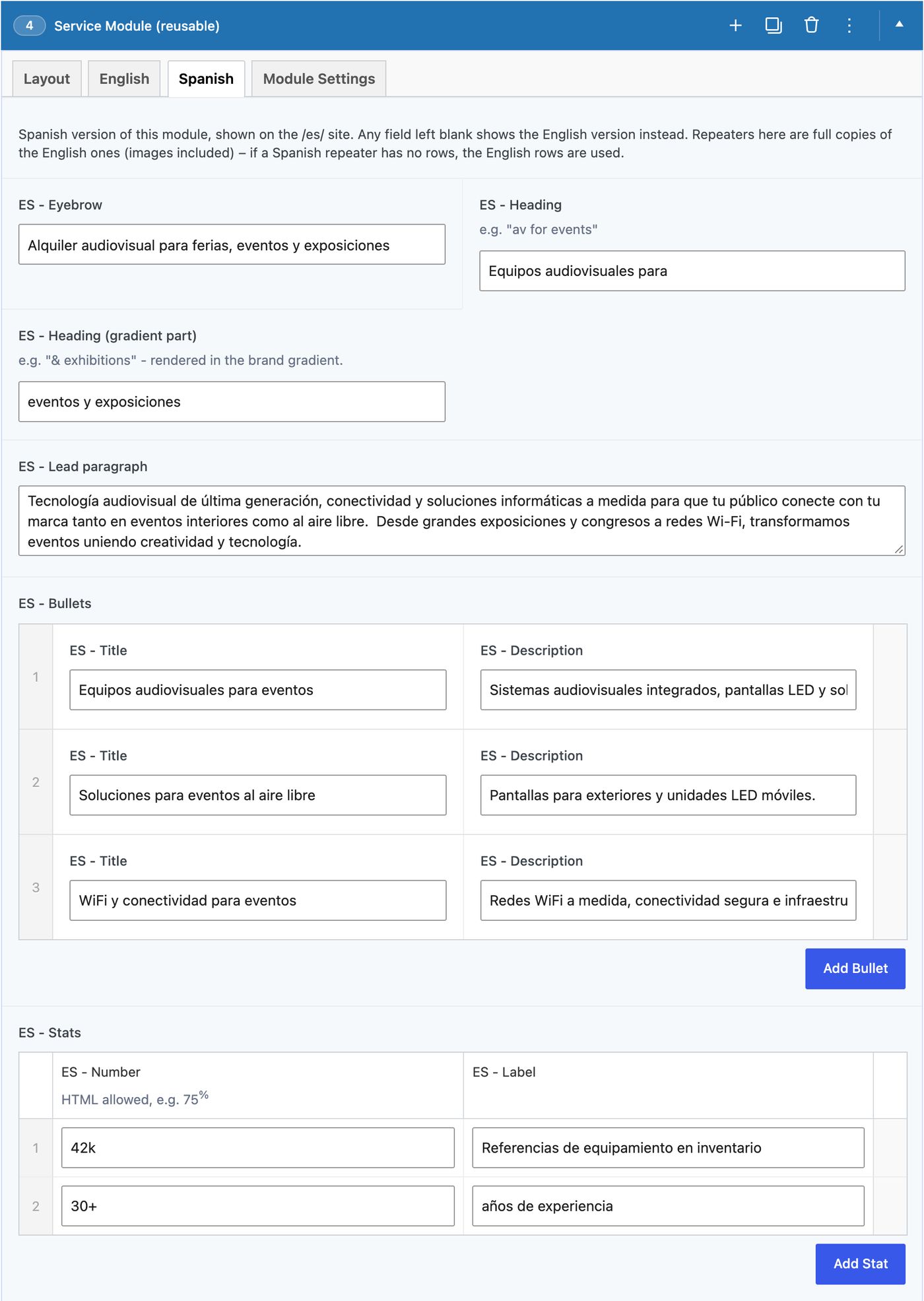
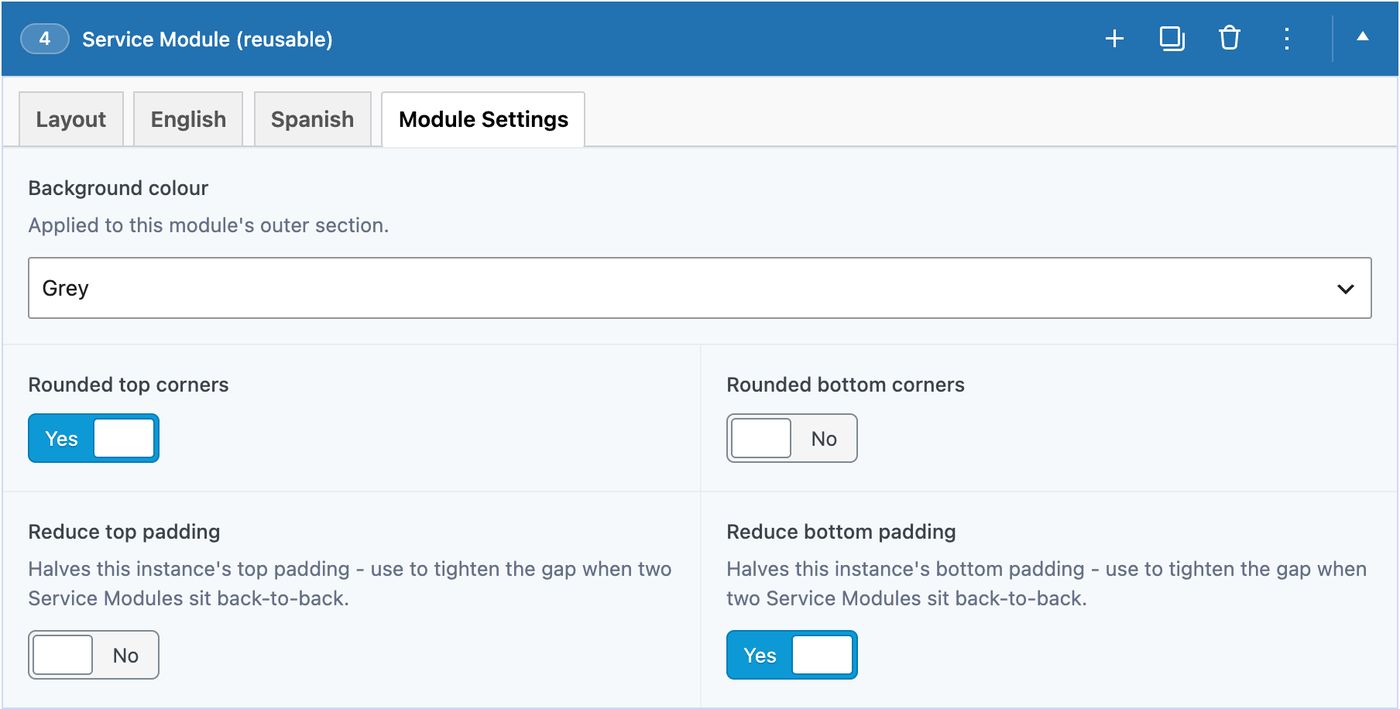
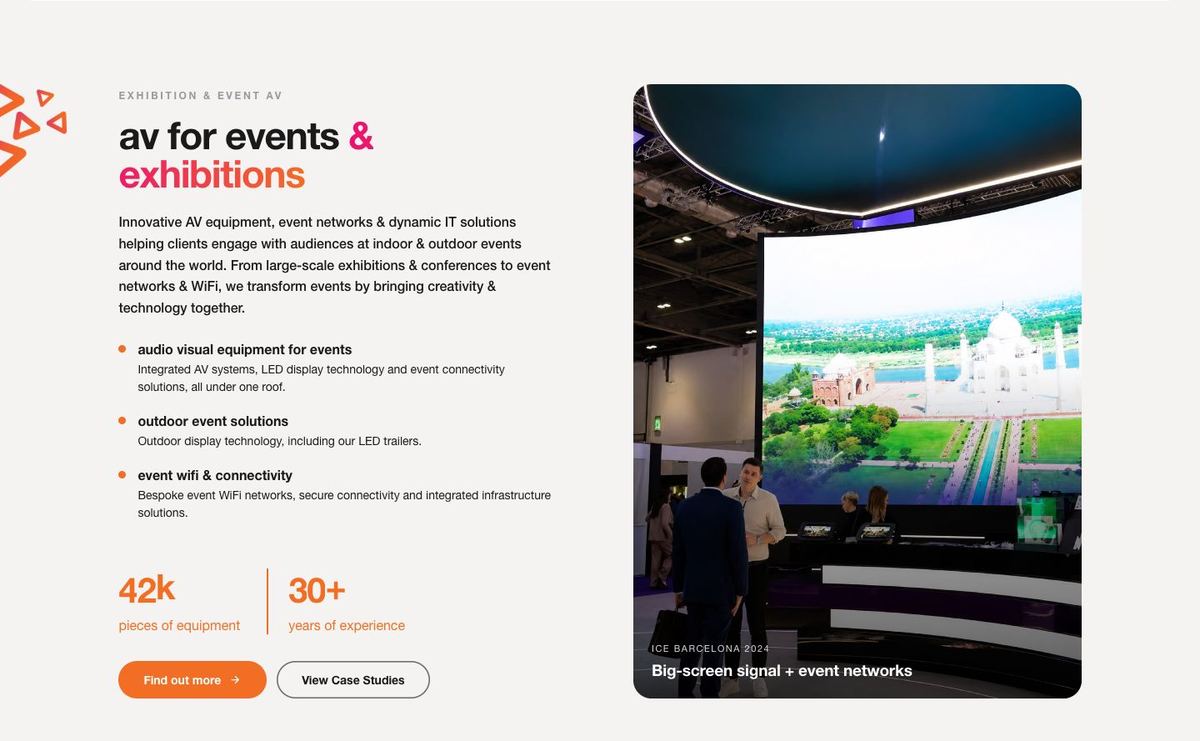
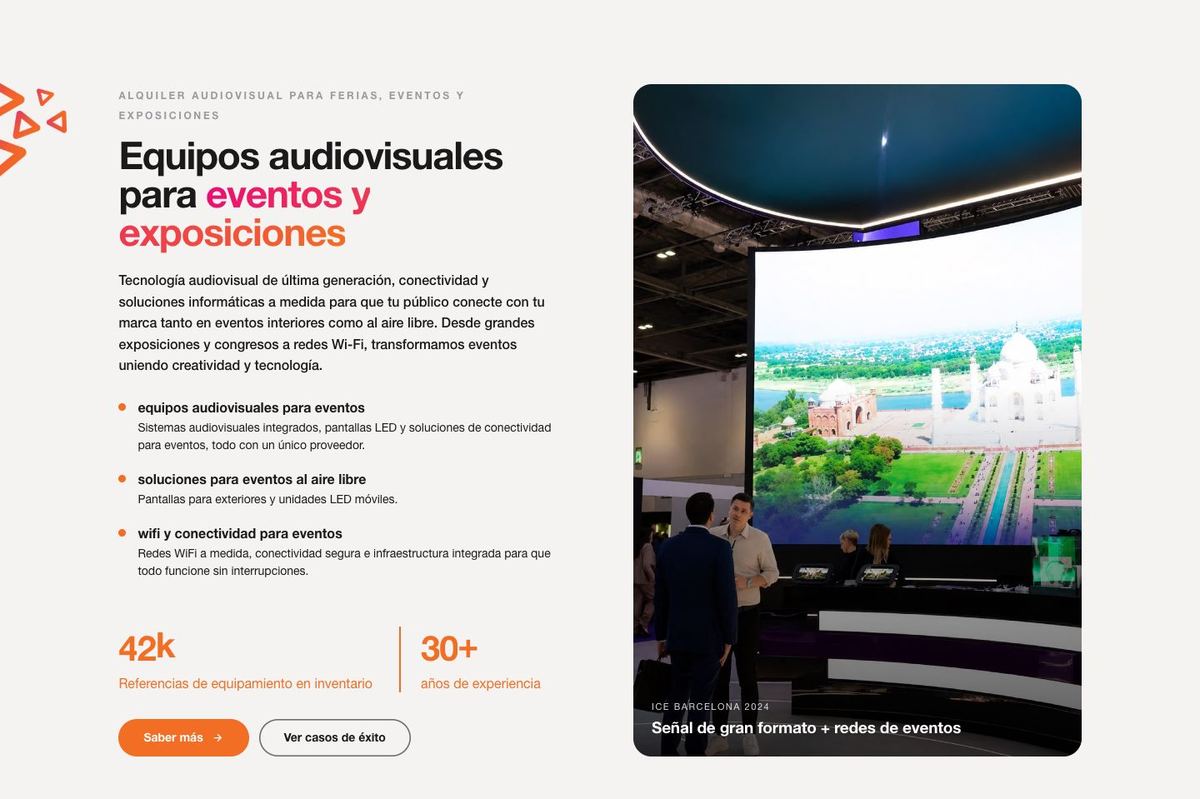
The AV Service Module on the homepage, as it appears in WordPress.
| Content | How it's stored | If the Spanish is blank |
|---|---|---|
| Headings, paragraphs, labels | English + ES field | The English text shows on the Spanish page. |
| Buttons and links | English + ES field | The English button shows. If it links to a page on this site, it still goes to that page's Spanish version. |
| Lists (cards, steps, stats, bullets) | English + ES list | The whole English list shows. Once the Spanish list has a row, only the Spanish rows show, so add new rows to both lists. |
| Images, colours, corners, spacing | Shared | Nothing to translate. Set once in Layout or Module Settings. |
| Adding, removing or reordering modules | Shared | Changes both languages at once. A new module shows English on the Spanish page until its Spanish tab is filled in. |
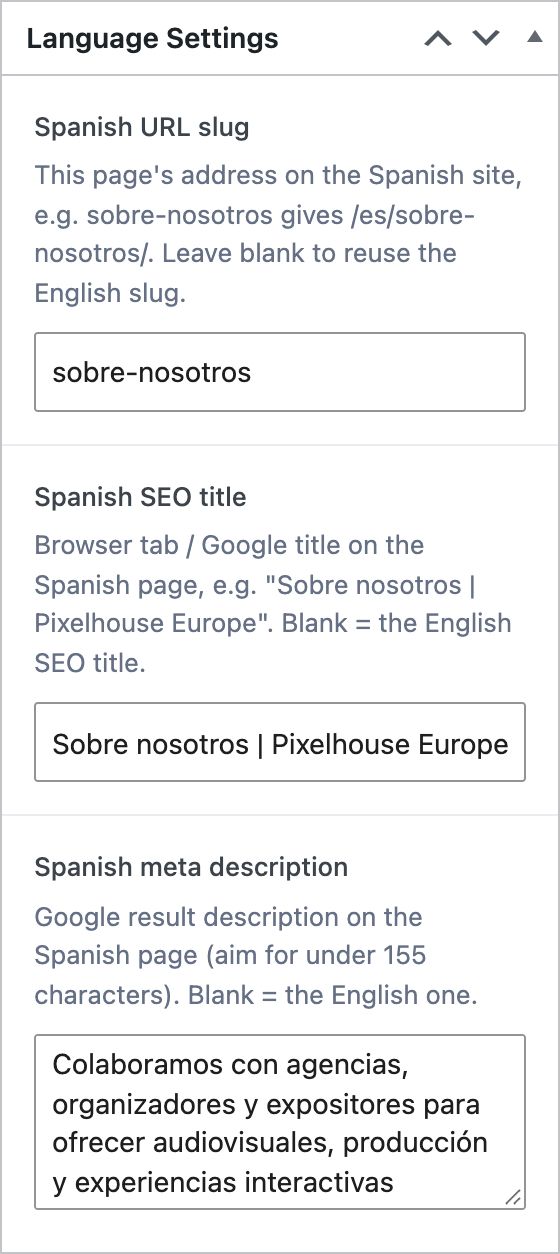
| Page address | Language Settings box | The English page name is used inside /es/. |
| Search title and description | Language Settings box | The English Yoast title and description are used. |
| Header and footer menus | English + Spanish menu | The English menu shows, with links still going to Spanish pages. Both menus are filled in now, so menu changes need making in both tabs. |
| Team roles and bios, case study summaries | English + ES field | The English text shows. |
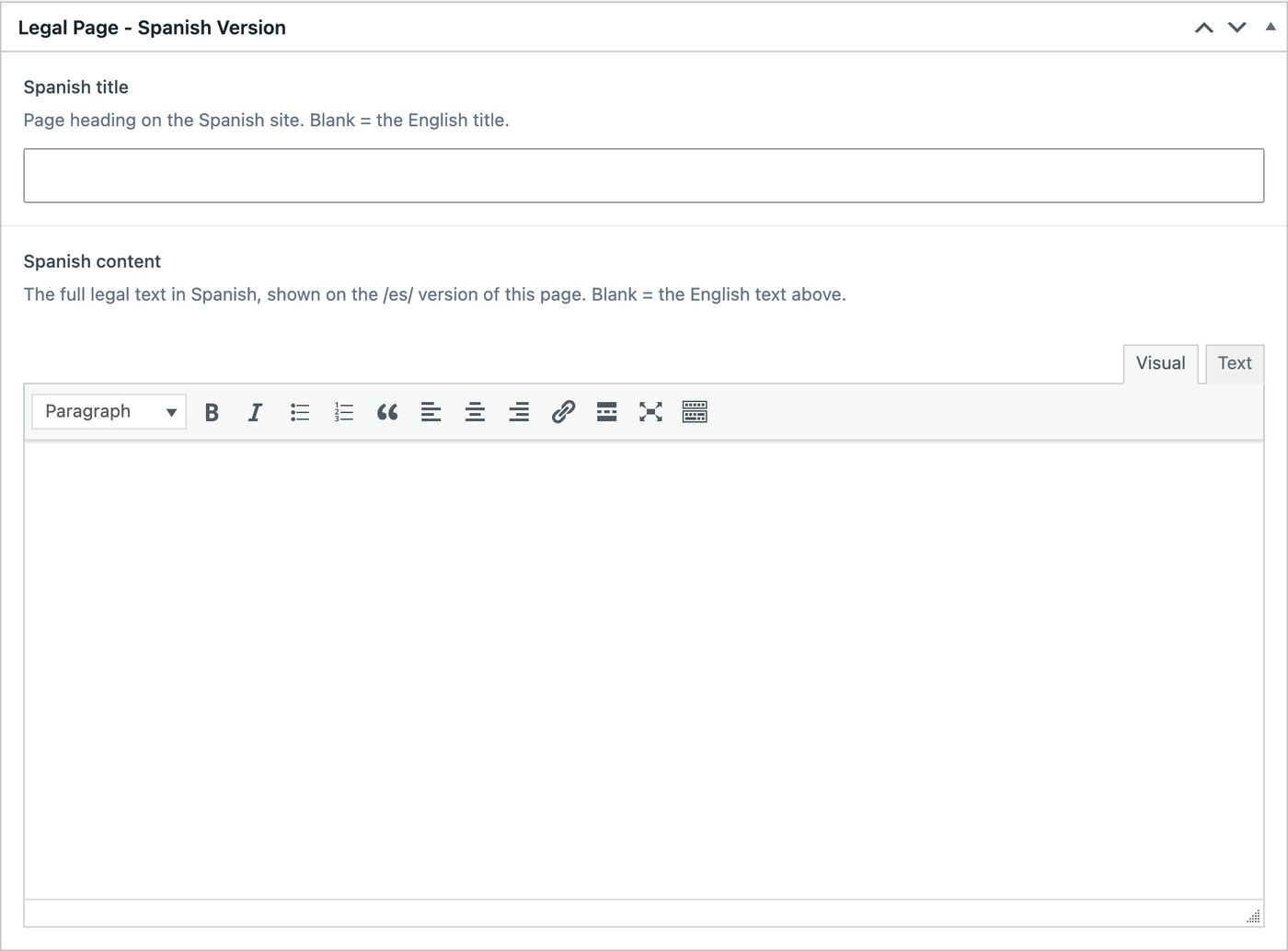
| Legal pages | Spanish Version box | The English document shows. This is the current state until the reviewed translations are added. |
| Contact forms and confirmation emails | Spanish form copy | Spanish pages use a Spanish copy of each form, so visitors get Spanish labels, messages and a Spanish confirmation email. Enquiries from the Spanish site arrive marked [ES]. |
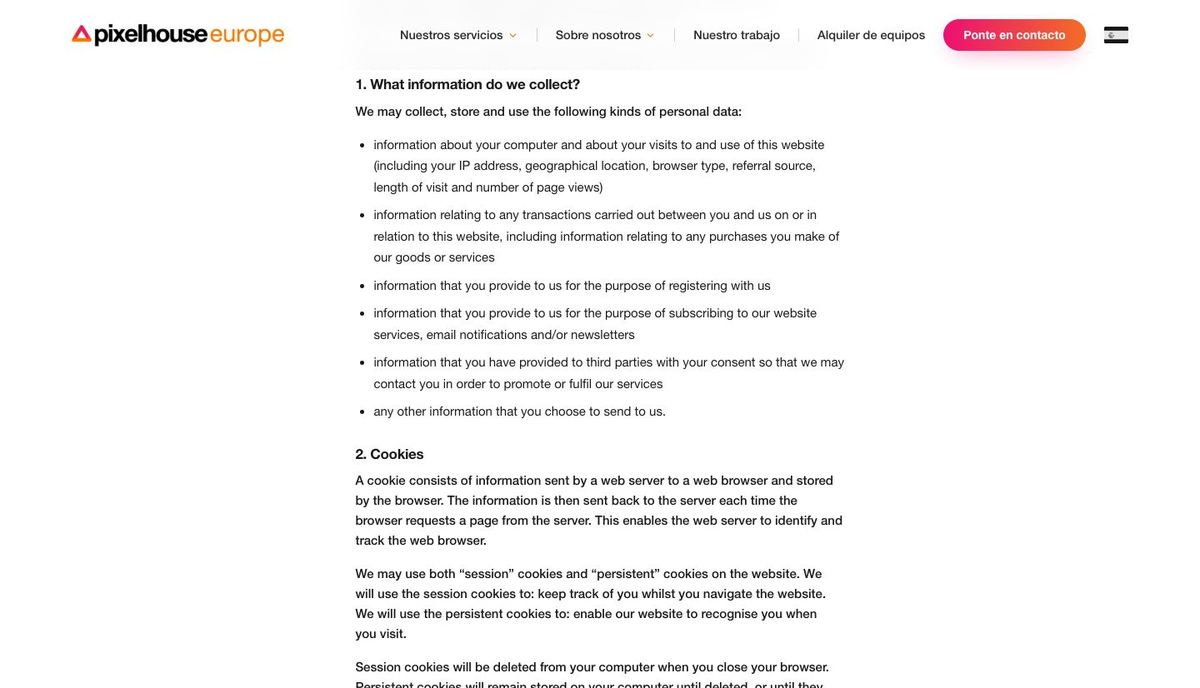
/es/privacy-policy/ shows the Spanish menu around the English document. Once the reviewed translation goes into its Spanish Version box, this page switches with no other changes.